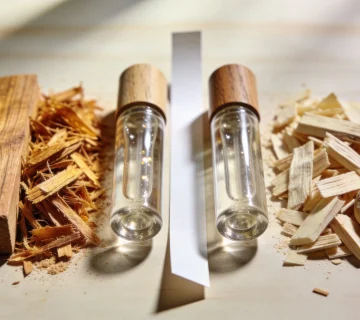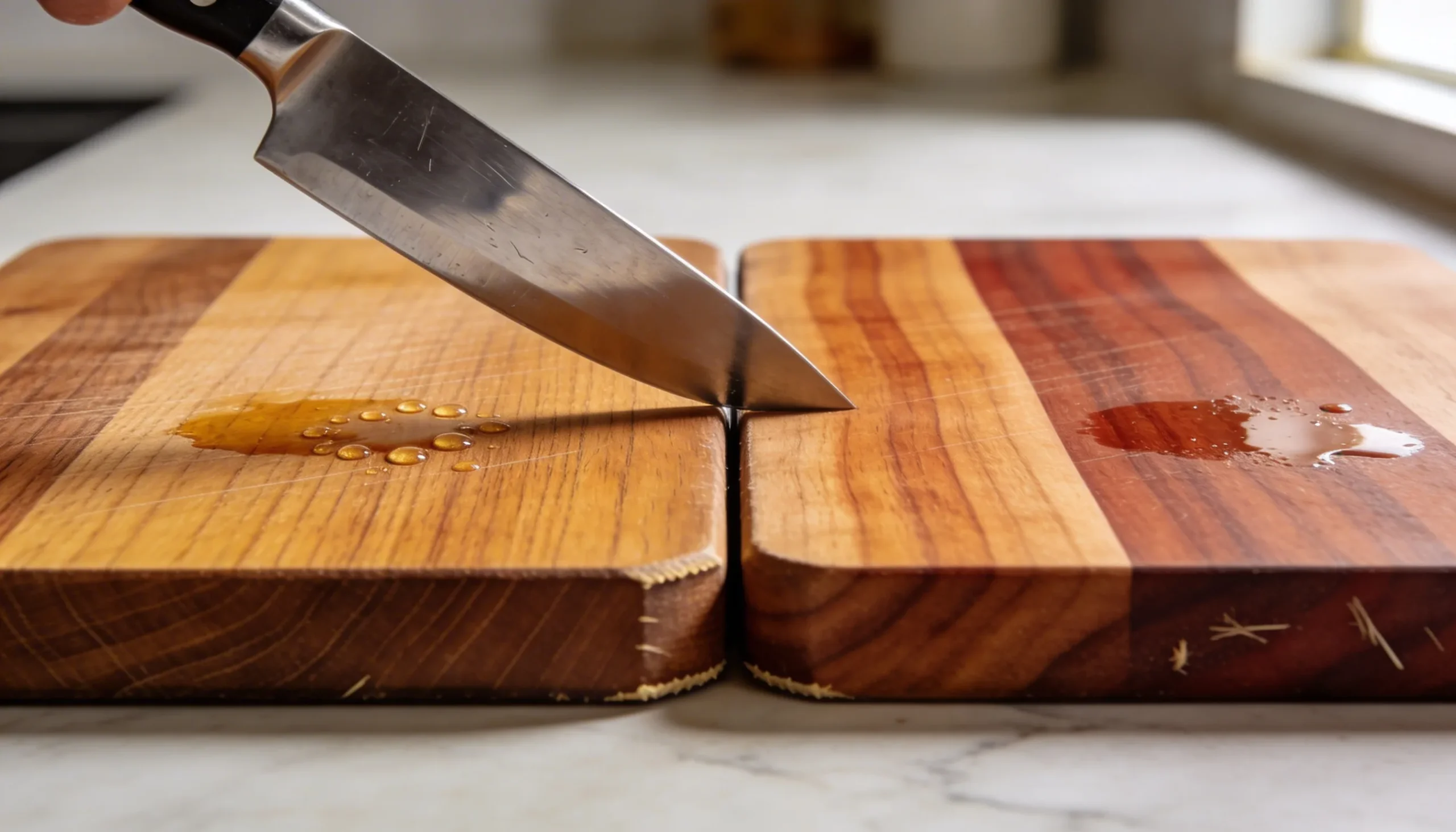
teakwood vs acacia cutting board


Teakwood vs Acacia Cutting Board: Key Differences, Pros, and How to Choose

Teakwood vs Acacia Cutting Board: Quick Summary

If you’re comparing teakwood vs acacia cutting board options, the “best” choice depends on how you cook, how much maintenance you’ll actually do, and whether you want a workhorse board or a budget-friendly board that also looks great.

Best for durability

Teakwood is typically favored for durability in wet, high-use kitchens because it’s naturally oily and tends to handle moisture exposure with fewer issues over time when cared for properly.

Best for knife friendliness

It depends more on grain style than species. End-grain boards (teak or acacia) are usually the most forgiving feel under a knife. Edge-grain boards are a close second and often more affordable and stable for many households.

Best for low maintenance

Teakwood often feels lower-maintenance because it tends to resist water absorption a bit better. That said, both woods still need regular hand-washing, thorough drying, and periodic oiling.

Best for budget

Acacia commonly wins on price. It’s widely available in a range of cutting board styles, including attractive serving boards, often at a lower cost than teak.

Best for appearance

Acacia is popular for bold contrast and decorative grain variation. Teak is typically more uniform and understated, with a classic warm tone that fits many kitchens.

What Is a Teakwood Cutting Board?

Teakwood basics (material overview)

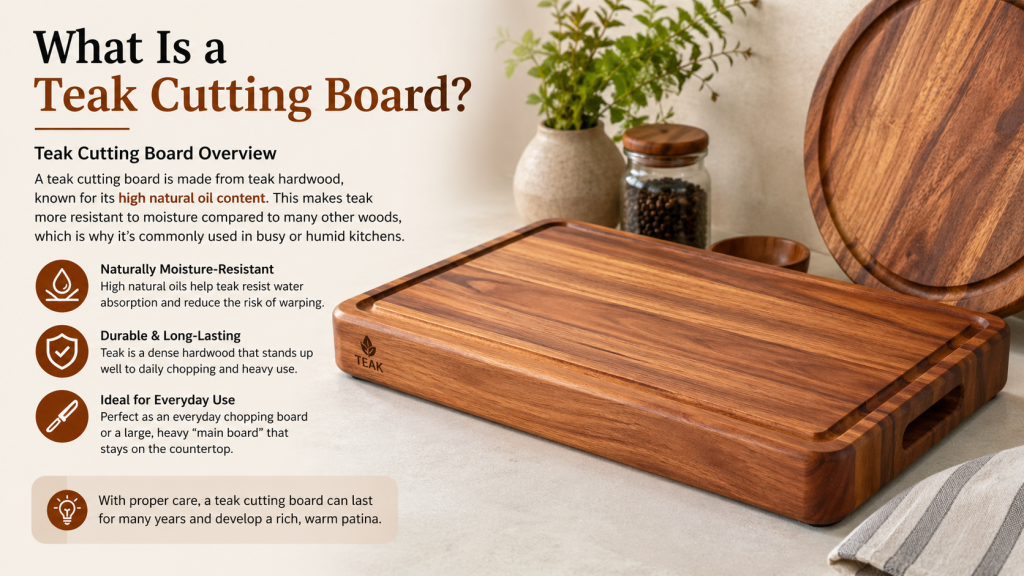
A teakwood cutting board is made from teak, a hardwood known for its natural oils. Those oils are one reason teak is often associated with improved moisture resistance compared with many other woods used in kitchens. In the teakwood vs acacia cutting board debate, teak’s reputation is often tied to how it behaves around water, frequent washing, and humid environments.

Teak boards are commonly chosen as everyday prep boards, dedicated chopping boards, and heavier “main station” boards that stay on the countertop.

Typical construction types

End-grain teak cutting board

End-grain teak boards are built with the wood fibers oriented vertically (the “ends” of the wood). This construction tends to feel softer under the knife because the blade slips between fibers rather than slicing across them. End-grain can also help hide knife marks better, though build quality matters a lot because there are more glue joints.

Edge-grain teak cutting board

Edge-grain teak boards align wood strips so the edges face up. These boards are often very practical: stable, durable, and typically less expensive than end-grain. For many kitchens, edge-grain is a strong balance of performance and price.

Face-grain teak cutting board

Face-grain (flat-grain) teak boards show the widest face of each plank. They’re often lighter and can look beautiful, but they may show knife marks sooner and are commonly used more for light prep or serving than heavy chopping.

Common sizes, thicknesses, and formats

Prep board

Teak prep boards are often medium-sized and easy to move for daily slicing, mincing, and quick meal prep. They’re a good fit if you wash and dry immediately after use.

Carving board with juice groove

Many teak carving boards include a juice groove to catch liquids from roasts, steaks, or fruit. This is helpful for keeping counters clean, but grooves also need extra cleaning attention.

Board with handles / feet

Handles or finger grips make heavier teak boards easier to lift and rinse. Non-slip feet help with stability, though they can trap moisture underneath if the board is stored flat and damp.

What Is an Acacia Cutting Board?

Acacia basics (material overview)

An acacia cutting board is made from acacia hardwoods, commonly selected for their eye-catching grain and frequent availability at budget-friendly prices. In many teakwood vs acacia cutting board comparisons, acacia stands out for style-per-dollar and a broad range of formats—from basic chopping boards to decorative serving pieces.

Acacia can perform very well in the kitchen, but it benefits from consistent drying and regular conditioning to reduce the chances of movement over time.

Typical construction types

End-grain acacia cutting board

End-grain acacia boards can be excellent for knife feel and for reducing visible cut marks. Because end-grain boards include many blocks and glue joints, choose one with tight joins and good thickness for long-term stability.

Edge-grain acacia cutting board

Edge-grain acacia is common and practical. It’s often a good “first serious board” option: stable, attractive, and less costly than end-grain while still holding up well with proper care.

Face-grain acacia cutting board

Face-grain acacia boards are often used for light slicing, snack prep, and serving. They can show wear sooner under heavy chopping, but they can look great on a countertop or table.

Common sizes, thicknesses, and formats

Prep board

Acacia prep boards are widely sold in compact to medium sizes, making them easy to store and easy to handle at the sink—especially helpful in smaller kitchens.

Serving board / paddle style

Acacia is especially popular for serving boards due to its dramatic grain variation. Paddle-style boards work well for bread, cheese, and charcuterie, but they’re not always ideal as a primary chopping board if they’re thin.

Carving board with juice groove

Acacia carving boards often include juice grooves and sometimes integrated handles. For messy proteins or fruit, a groove can help—but clean it thoroughly to avoid odor buildup.

Teakwood vs Acacia Cutting Board: Side-by-Side Comparison

Factor Teakwood Cutting Board Acacia Cutting Board
General feel Often described as smooth and resilient; naturally oily Often firm with striking grain; performance varies by build
Typical positioning Premium, long-term daily board Value-friendly, decorative and versatile
Maintenance tendency Often perceived as lower maintenance due to moisture resistance Can need more consistent conditioning to minimize movement

Hardness and dent resistance

Hardness influences how easily a board dents under impact. Both teak and acacia are hardwoods, but real-world dent resistance depends on the specific board, thickness, and construction. If you do a lot of forceful chopping, a thicker board—especially end-grain—usually handles impact better regardless of whether it’s teak or acacia.

Knife edge impact (knife friendliness)

Knife friendliness is largely about grain orientation and surface finish. In teakwood vs acacia cutting board choices, an end-grain option in either wood is usually the most forgiving on knife edges. Edge-grain is still very workable for most home cooks. Avoid overly thin boards for heavy chopping because they can feel “hard” simply due to lack of mass and stability.

Moisture resistance and water absorption

Teak’s natural oils often give it an advantage with moisture resistance, especially when a board is washed frequently. Acacia can still perform well, but it may absorb water more readily if it’s left wet, stored flat while damp, or not conditioned regularly.

Warp resistance and dimensional stability

Warping is usually caused by uneven moisture exposure—one side stays wetter than the other. Teak often has a strong reputation for stability in changing humidity, while acacia can be more sensitive if it’s thin or inconsistently sealed. Regardless of wood type, thicker boards and good craftsmanship reduce warping risk.

Scratch visibility and surface wear

End-grain surfaces tend to hide knife marks better than edge- or face-grain. Teak and acacia both develop a “patina” with use. If you care about a cleaner-looking surface day to day, choose a thicker end-grain board or a board you’re willing to refinish occasionally.

Stain and odor retention

Both woods can pick up stains and odors if not cleaned promptly—especially from onions, garlic, fish, and strongly colored foods. Teak’s natural oils may help a bit with absorption, but neither wood is stain-proof. Quick washing, full drying, and periodic conditioning make the biggest difference.

Heat tolerance (hot pans and temperature shifts)

Wood boards don’t love heat shocks. Setting a hot pan on either teak or acacia can cause localized drying and stress that encourages cracking or warping. Sudden temperature shifts—like hot water followed by cold rinsing—also increase movement risk. Use trivets for hot cookware.

Weight and portability

Teak boards—especially thick or end-grain—can be noticeably heavy, which is great for staying put but less convenient for frequent lifting and washing. Acacia boards are often a bit lighter in common retail formats, making them easier to move, store, and clean in smaller sinks.

Grip and countertop stability

Stability depends on weight, flatness, and whether the board has feet. A heavy board with a flat base grips naturally. Feet can help prevent sliding, but make sure the board doesn’t rock. For boards without feet, a damp towel underneath is a simple stability upgrade.

Appearance (color, grain pattern, variation)

If appearance is a priority in your teakwood vs acacia cutting board decision, acacia often delivers bolder contrast and more dramatic patterns. Teak typically looks more uniform and classic, aging into a warm, mellow tone over time.

Performance in Real Kitchen Tasks (Teakwood vs Acacia Cutting Board)

Daily chopping and slicing

For everyday vegetables, herbs, and proteins, both teak and acacia can be excellent. Teak often feels reassuring for daily use because it handles frequent rinsing well. Acacia performs best when you’re consistent about not leaving it wet and when you oil it as needed.

Heavy cleaver use and impact chopping

If you regularly use a cleaver or do impact chopping, prioritize thickness and construction over species. A thick end-grain board (teak or acacia) is typically the best fit. If choosing edge-grain, go thicker to reduce vibration and stress on glue joints.

Carving meats and handling juices

For carving, a board with a juice groove can keep counters cleaner. Teak’s moisture resistance can be helpful if you’re carving juicy meats often, but acacia can do the job just as well if you wash promptly and dry upright. Avoid letting juices sit in grooves for long periods.

Handling acidic ingredients and strong aromas

Acidic foods like citrus and tomatoes aren’t usually a problem for wood in short contact, but prolonged exposure can dull the finish and increase absorption. Strong aromas (garlic, onion, fish) require prompt cleaning. If odor control is a top concern, choose a board you can comfortably deep-clean and recondition regularly.

Serving and presentation use

Acacia is a standout for presentation boards thanks to its decorative grain, especially in paddle and charcuterie styles. Teak looks more understated and premium in a minimalist way. If you want one board that can do both prep and serving, choose a thicker board with a clean, smooth finish and easy-to-clean edges.

Maintenance Requirements (Teakwood vs Acacia Cutting Board)

Wood Decking

Hand-washing steps

  1. Scrape off food debris (a bench scraper works well).
  2. Rinse quickly with warm water (avoid prolonged running water on the surface).
  3. Wash with mild dish soap and a soft sponge.
  4. Rinse and immediately wipe dry with a clean towel.

For teakwood vs acacia cutting board care, the biggest rule is the same: don’t soak, and don’t leave it sitting wet.

Drying and storage orientation

Dry the board on edge or on a rack so air reaches both sides evenly. Storing flat while damp is a common cause of warping and mildew odor. If your board has feet, ensure airflow underneath or store it upright after drying.

Oiling frequency and conditioning

Both teak and acacia benefit from food-safe oiling. Teak may appear to need it less often because it contains natural oils, but every board is different—kitchen humidity, washing frequency, and detergents all matter.

Signs your board needs oil

  • The surface looks dull, pale, or dry.
  • Water no longer beads and instead absorbs quickly.
  • The board feels rougher than usual.
  • You notice increased staining from normal foods.

Oil type compatibility (food-safe options)

Use a food-safe mineral oil or a dedicated board oil/conditioner. Many people also use a board cream (often mineral oil blended with beeswax) as a final conditioning layer. Avoid cooking oils that can turn sticky or smell rancid over time.

Deep cleaning and deodorizing

When odors or discoloration build up, deep clean by scrubbing with coarse salt and a cut lemon, or use a baking soda paste with gentle scrubbing. Rinse briefly, wipe dry, let the board air-dry fully, then re-oil. This routine works well for both teak and acacia.

Sanitizing considerations

For extra sanitizing after raw meat, you can use a diluted vinegar wipe or a properly diluted food-safe sanitizing solution, then rinse quickly and dry thoroughly. Avoid harsh chemicals or strong bleach mixes that can degrade the wood and dry it out excessively.

Resurfacing and repairability

Sanding and refinishing

One advantage of wood boards is repairability. If the surface gets rough or heavily scarred, sand lightly with fine-grit sandpaper, clean off dust, let dry, then oil thoroughly. End-grain boards may require more time to sand evenly due to the block pattern.

Fixing raised grain and minor cracks

Raised grain often happens after washing; a light sanding and re-oiling usually restores smoothness. Minor cracks can sometimes be stabilized by correcting the board’s drying routine and keeping it conditioned. Larger cracks or separated joints are typically signs the board is nearing replacement or needs professional repair.

Cost and Value Comparison

Typical price ranges for teakwood cutting boards

Teakwood cutting boards are often priced in the mid to premium range. Thicker boards and end-grain builds typically cost more due to material use and labor. Expect higher prices for large, heavy “main station” boards.

Typical price ranges for acacia cutting boards

Acacia cutting boards are commonly more budget-friendly. Many attractive edge-grain and face-grain boards are priced accessibly, while thick end-grain acacia boards can move into mid-range pricing depending on craftsmanship.

What drives cost (size, thickness, grain orientation, build quality)

  • Size: Larger boards use more material and cost more to ship.
  • Thickness: Thicker boards resist warping better but add cost and weight.
  • Grain orientation: End-grain is typically the most expensive due to labor and complexity.
  • Build quality: Tight joins, flatness, and clean finishing usually cost more but last longer.

Long-term value factors (lifespan, maintenance time, replacement frequency)

In a teakwood vs acacia cutting board value comparison, long-term cost depends on how long the board stays flat, how well it resists deep cracking, and how willing you are to oil and maintain it. A more expensive board can be a better value if it lasts years longer and needs fewer repairs or replacements.

Risks, Drawbacks, and Common Problems

Teakwood cutting board risks

Surface feel and wear concerns

Teak can feel slightly different under the knife compared to other woods due to its density and oil content. Some users dislike the “slick” feel when freshly oiled, and any wood board will show wear with heavy use. Choosing the right grain style helps manage visible wear.

Potential issues with fit/finish

Not all teak boards are finished equally. Rough edges, uneven sanding, or poorly sealed end grain can lead to faster moisture uptake at weak points. Inspect for smoothness and consistent finishing.

Acacia cutting board risks

Movement/warping concerns

Acacia boards—especially thinner ones—can be more prone to movement if they’re repeatedly exposed to water on one side or stored damp. Proper drying (upright) and consistent conditioning reduce the risk significantly.

Potential issues with fit/finish

Some acacia boards are produced primarily for decorative use, which can mean thinner builds, cosmetic filling, or less attention to flatness. If you want a true cutting board, prioritize thickness, flatness, and tight joins over appearance alone.

Shared risks for both materials

Splitting/cracking from improper drying

Soaking, dishwasher cycles, or storing wet are common causes of splits and cracks for both woods.

Glue line or joint failures

Boards made from strips or blocks rely on strong glue joints. Excess moisture, heat shocks, and repeated warping stress those joints over time.

Slipping during use (safety)

A sliding board is a safety hazard. Use a damp towel under the board or choose one with stable non-slip feet that don’t wobble.

Mold/mildew risk from improper storage

Mildew odor or spotting can occur when boards are stored damp, flat, or in low-airflow areas. Always dry thoroughly and store with airflow around both faces.

Food Safety and Hygiene Considerations

Cross-contamination prevention practices

  • Wash immediately after handling raw meat, poultry, or seafood.
  • Use hot soapy water and scrub grooves and corners thoroughly.
  • Dry completely before storing.
  • Consider separate boards for raw proteins and ready-to-eat foods.

Food safety is less about teakwood vs acacia cutting board and more about how consistently you clean, dry, and rotate boards.

When to retire a teakwood or acacia cutting board

Replace your board if it develops deep cracks that won’t sand out, persistent odors that remain after deep cleaning and conditioning, or separated joints that create hard-to-clean gaps. Also retire a board if it won’t sit flat and becomes unsafe to use.

Using separate boards for different foods (planning and rotation)

Using multiple boards can simplify hygiene. For example: one for raw proteins, one for produce and bread, and one for strong-aroma foods like onions or fish. Rotation also reduces wear on your primary board and helps each board dry fully between uses.

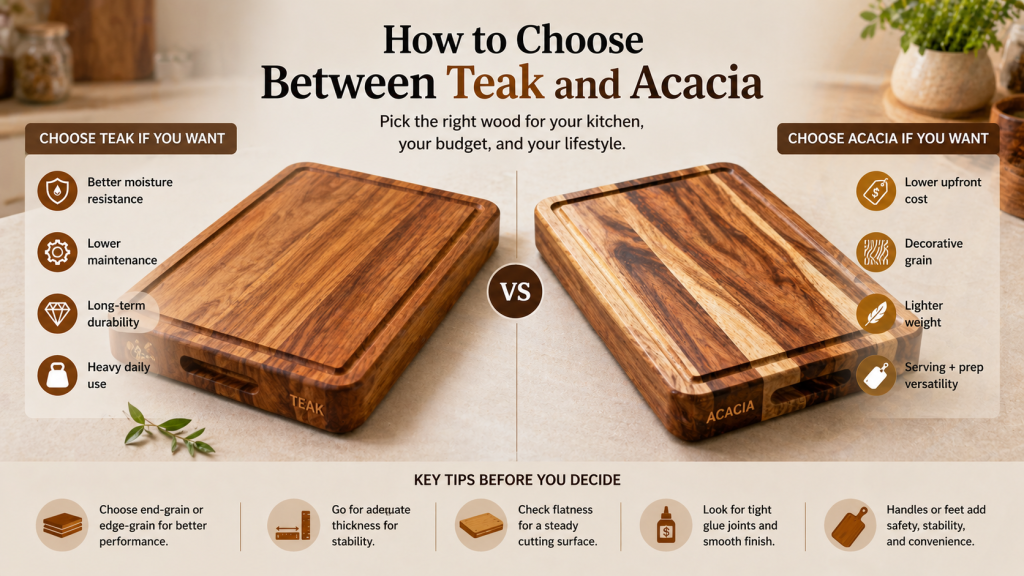
How to Choose Between Teakwood vs Acacia Cutting Board

Choose teakwood cutting board if you prioritize

Lower maintenance expectations

If you want a board that tends to be forgiving with frequent rinsing and busy kitchen routines, teak is often chosen for its naturally oily character and moisture-handling reputation.

High moisture resistance

For cooks who wash boards often, live in humid climates, or regularly carve juicy proteins, teak’s moisture resistance can be a practical advantage.

Long-term durability focus

If your goal is a long-lasting “main board” you keep on the counter and maintain for years, teak is commonly a strong candidate—especially in thicker, well-built designs.

Choose acacia cutting board if you prioritize

Budget-friendly purchase

If you want strong performance without the premium price tag, acacia often offers excellent value, particularly in edge-grain boards.

Decorative grain and presentation

If you want a board that looks great for serving as well as prep, acacia’s visual variation is a major draw in the teakwood vs acacia cutting board decision.

Lighter-weight handling

If you prefer a board that’s easier to lift, wash, and store—especially in smaller kitchens—many acacia options are lighter in common sizes and thicknesses.

Choose based on your cooking style

Light prep vs heavy prep

For light prep (fruit, snacks, simple dinners), either wood works well. For heavy prep (daily chopping, frequent carving, larger batches), choose a thicker board and consider end-grain for better wear handling.

Small space vs large workspace

Small kitchens often do better with a medium board that stores easily and dries upright. Large workspaces can support a heavier board that stays out full-time, giving you more stability and room to work.

Choose based on board construction

End-grain vs edge-grain decision

End-grain is typically the premium choice for knife feel and wear appearance, while edge-grain often provides excellent everyday performance with fewer cost and weight tradeoffs. In teakwood vs acacia cutting board choices, a high-quality edge-grain board can outperform a poorly made end-grain board.

Thickness recommendations by use case

  • Light prep: choose a board thick enough to stay stable and not flex during use.
  • Daily cooking: prioritize a thicker edge-grain or end-grain board for durability and flatter aging.
  • Heavy chopping/carving: go thicker and larger for stability, especially if it will live on the countertop.

Buying Guide: What to Look For in Teakwood and Acacia Cutting Boards

Grain orientation and why it matters

Grain orientation affects knife feel, wear patterns, and cost. End-grain is often more “self-healing” in appearance and gentler in feel, while edge-grain is a practical everyday standard. Face-grain is often best reserved for serving or light slicing.

Board thickness, weight, and stability features

Thicker boards generally stay flatter and feel more stable. Weight helps keep the board from sliding, but it can be harder to wash. Stability features can help—if they’re well executed.

Non-slip feet

Feet can improve grip and airflow underneath, but check that the board sits solidly with no rocking. Also ensure you can dry it properly so moisture doesn’t get trapped.

Finger grips/handles

Finger grips make a big difference for heavier boards. They reduce the chance of dropping the board at the sink and make it easier to rotate and clean.

Surface finish standards (smoothness, sealed edges)

Look for a smooth, even surface with comfortable edges. End grain and corners should be well finished, with no splinters or rough patches. A good finish helps reduce early water uptake and makes cleaning easier.

Juice grooves vs flat boards

Juice grooves are useful for carving and juicy fruit, but they add cleaning time. Flat boards are simpler to clean and often preferred as a primary daily chopping surface. Many kitchens do best with one flat main board plus a grooved carving board as a secondary.

One large board vs two smaller boards

A large board gives you space and stability, but it’s heavier and may be inconvenient to wash. Two smaller boards can be easier to rotate (one drying while the other is in use) and can reduce cross-contamination if you assign tasks.

Quality checks before buying

Flatness

Set the board on a flat surface if possible. Any rocking is a red flag, especially for a board marketed as a serious cutting surface.

Even coloration (as expected for wood)

Natural variation is normal—especially with acacia. What you want to avoid is odd blotchiness that looks like poor sanding, uneven finishing, or moisture staining.

Tight joins and clean corners

Inspect seams for gaps. Tight glue lines and clean corners generally indicate better craftsmanship, which matters a lot for long-term performance in any teakwood vs acacia cutting board purchase.

Accessories worth considering

Board cream/oil

Plan to buy food-safe mineral oil or board cream. A well-conditioned board stains less, absorbs less water, and is easier to clean.

Scraper

A scraper speeds up cleanup and reduces how much water and scrubbing your board needs after cooking.

Storage rack

A rack encourages upright drying and airflow. This can be one of the easiest ways to reduce warping and mildew odor risk.

Care Checklist for Long-Lasting Use (Teakwood vs Acacia Cutting Board)

Daily checklist

  • Scrape food residue promptly.
  • Hand-wash with mild soap; avoid soaking.
  • Wipe dry immediately.
  • Air-dry upright or on a rack until fully dry on both sides.

Weekly/monthly checklist

  • Check for dryness; oil when water stops beading.
  • Deep clean if odors or stains are noticeable.
  • Inspect for raised grain, small cracks, or seam changes.

Storage do’s and don’ts

  • Do store upright or with airflow on both faces.
  • Do keep away from direct heat sources and sunny windows that over-dry the wood.
  • Don’t store flat while damp.
  • Don’t trap it in a tight space with no airflow.

What to avoid (dishwasher, soaking, harsh chemicals)

  • Dishwashers: heat + water exposure can warp boards and break glue joints.
  • Soaking: encourages swelling, cracking, and seam stress.
  • Harsh chemicals: can damage wood fibers and dry out the surface.

FAQs: Teakwood vs Acacia Cutting Board

Which is better: teakwood vs acacia cutting board?

Best answer: The better option depends on priorities—teakwood typically suits lower-maintenance and moisture-resistance needs, while acacia often fits tighter budgets and decorative preferences.

Is a teakwood cutting board too hard for knives compared with acacia?

Best answer: Knife feel varies by board construction and finish; compare end-grain and edge-grain options within teakwood vs acacia cutting board choices before deciding.

Do teakwood cutting boards require less oiling than acacia cutting boards?

Best answer: Oiling needs depend on how quickly the surface looks dry and absorbs water; evaluate maintenance expectations for teakwood vs acacia cutting board use in your routine.

Which lasts longer: teakwood or acacia cutting board?

Best answer: Lifespan depends on build quality, thickness, grain orientation, and maintenance consistency for either teakwood vs acacia cutting board.

Are teakwood and acacia cutting boards safe for raw meat?

Best answer: Both can be used if cleaned and dried properly; food safety depends on hygiene practices rather than teakwood vs acacia cutting board alone.

Can I put a teakwood or acacia cutting board in the dishwasher?

Best answer: No—dishwashers can cause warping, cracking, and joint failure for both teakwood vs acacia cutting board materials.

How do I remove odors from a teakwood vs acacia cutting board?

Best answer: Use a deep-clean routine appropriate for wood cutting boards, then dry thoroughly and re-oil if needed.

Should I choose end-grain teakwood vs end-grain acacia cutting board?

Best answer: Compare stability, maintenance comfort, and budget; end-grain performance also depends heavily on craftsmanship for both teakwood vs acacia cutting board options.

No comment

Leave a Reply

Your email address will not be published. Required fields are marked *