
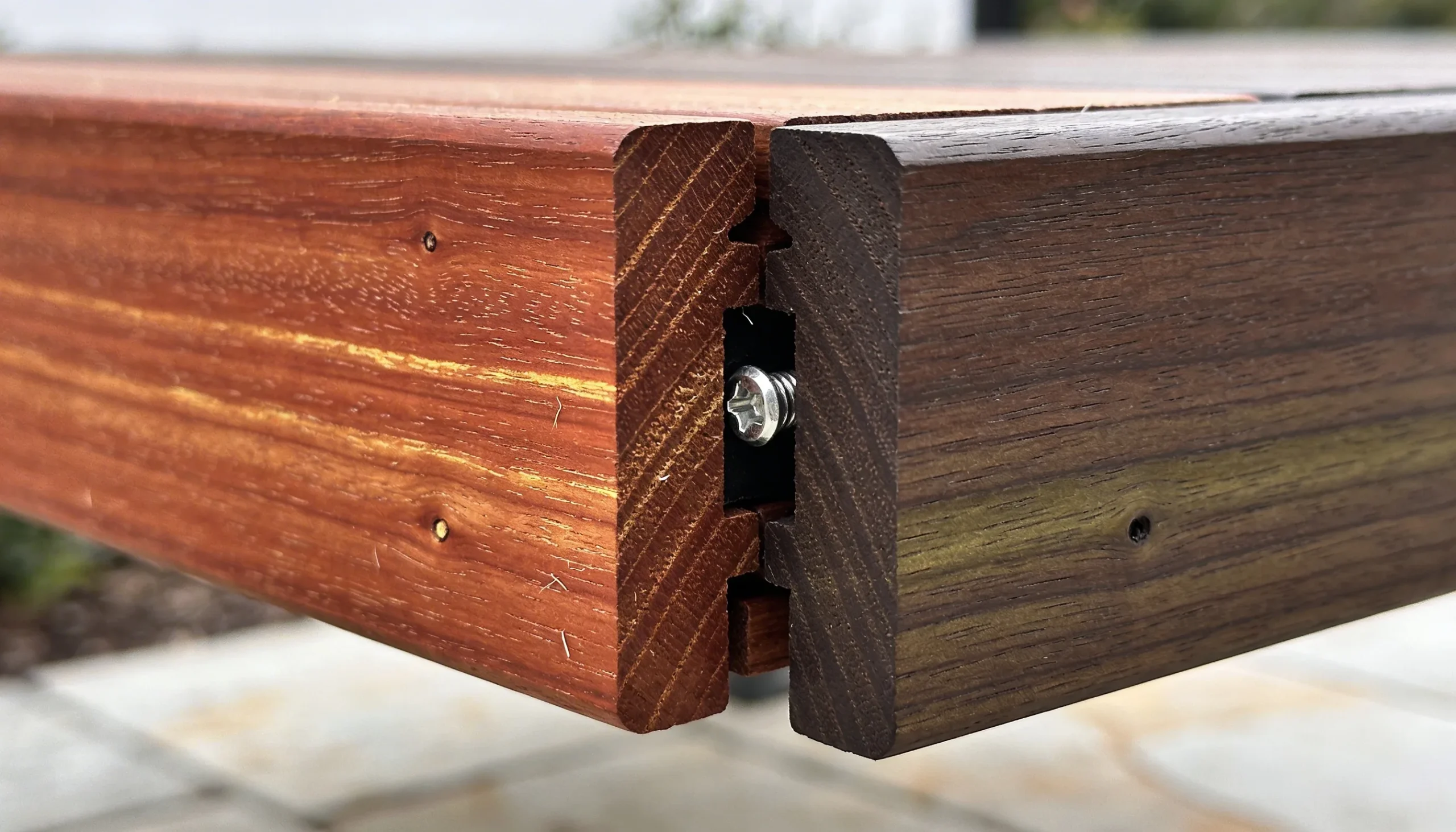
Choosing between batu vs ipe decking usually comes down to four major factors: durability, appearance, budget, and installation difficulty. Both are dense tropical hardwoods used for premium outdoor decking, but they are not the same in performance, cost, workability, or long-term value.
Batu decking, commonly sold as Red Balau, is known for its warm red-brown color, strong outdoor performance, and more accessible price point compared with Ipe. Ipe decking, often called Brazilian walnut, is one of the hardest and most durable hardwood decking options available, making it a top choice for demanding residential and commercial projects.
This guide compares Batu and Ipe side by side so you can choose the better decking material for your climate, budget, design goals, and maintenance expectations.
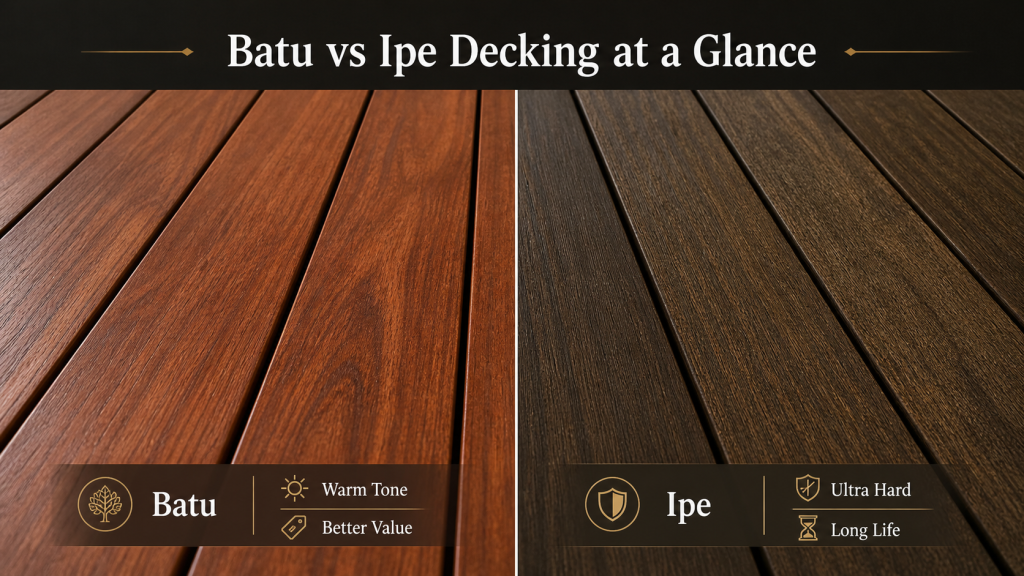
Batu vs Ipe Decking at a Glance
What Is Batu Decking?
Batu decking is a dense tropical hardwood commonly sold under names such as Batu or Red Balau. It is typically sourced from Southeast Asia and is used for outdoor decking because of its strength, attractive grain, and natural resistance to decay when properly installed and maintained.
Batu boards often feature warm red-brown to medium-brown tones when new. They provide a premium hardwood look while usually costing less upfront than Ipe. For homeowners who want real hardwood decking without moving into the highest price tier, Batu can be a strong option.
What Is Ipe Decking?
Ipe decking, often called Brazilian walnut, is an extremely dense South American hardwood known for exceptional hardness, long service life, and strong natural resistance to rot, insects, and heavy wear.
Ipe is often selected for high-demand decks, luxury outdoor living spaces, boardwalk-style projects, and commercial applications where maximum durability is a priority. It commonly starts in medium brown to deep brown tones, sometimes with olive-brown undertones and darker striping.
Quick Summary: Batu vs Ipe Decking
| Factor | Batu Decking | Ipe Decking |
|---|---|---|
| Hardness | Dense and durable hardwood | Harder and more impact-resistant |
| Color | Warm red-brown to medium brown | Medium brown, deep brown, olive-brown tones |
| Durability | Strong performance with proper installation | Excellent long-term durability |
| Workability | Still requires pre-drilling, but often easier than Ipe | Very hard on tools and more difficult to install |
| Cost | Usually lower upfront cost | Usually higher upfront cost |
| Best For | Premium hardwood look with better budget control | Maximum durability, heavy traffic, harsh exposure |
Batu vs Ipe Decking: Side-by-Side Comparison
The best way to compare batu vs ipe decking is to look beyond appearance. Both woods are premium outdoor materials, but their performance depends on density, stability, installation quality, climate exposure, maintenance habits, and supplier consistency.
Appearance and Color
For many homeowners, the Batu vs Ipe decision starts with how the deck looks on day one and how that appearance changes after years of sun, rain, and outdoor exposure.
Grain Pattern
Batu commonly has a refined hardwood appearance with relatively uniform grain and occasional interlocking patterns. It can create a clean, warm, and consistent deck surface when boards are carefully selected and mixed during installation.
Ipe often has a tighter, sometimes more dramatic grain. It may show natural striping, darker streaks, and more board-to-board variation. This variation is part of what gives Ipe a premium and natural appearance, but it also means careful layout matters.
Color Range and Consistency
Batu usually presents red-brown to medium-brown tones. It is often chosen by homeowners who want a warm, rich hardwood look.
Ipe usually ranges from medium brown to deep brown, sometimes with olive or darker undertones. It can look more understated, dense, and luxurious compared with Batu’s warmer red-brown character.
For both materials, color consistency depends heavily on grade, supplier selection, batch quality, and installation planning. If visual uniformity is important, order extra boards, inspect before installation, and mix boards from different bundles.
How Each Wood Changes Over Time
Both Batu and Ipe will naturally weather toward a silver-gray patina if left unfinished and exposed to UV. This is normal for exterior hardwood decking.
If you want to preserve the original color, either wood can be maintained with a penetrating hardwood deck oil that contains UV inhibitors. However, color retention requires recurring maintenance. Sunny areas will gray faster, while shaded areas often stay darker for longer, especially if maintenance is inconsistent.
Density and Hardness
Density and hardness affect dent resistance, scratch resistance, cutting difficulty, fastening strategy, and overall durability. In a batu vs ipe decking comparison, Ipe is generally the harder and denser option.
Impact Resistance
Ipe typically resists dents from dropped objects, furniture legs, and heavy traffic better than Batu because of its extreme hardness. This makes it especially suitable for high-use decks, luxury outdoor spaces, restaurants, commercial walkways, and areas with frequent entertaining.
Batu is still a dense hardwood and performs well for most residential decking projects. However, under the same conditions, it may show impact marks sooner than Ipe.
Scratch Resistance
Ipe generally offers better scratch resistance, especially in homes with pets, movable furniture, or high foot traffic. Batu can perform strongly, but it may show wear sooner in high-traffic lanes or where grit, sand, or outdoor debris is frequently tracked across the deck.
For both woods, furniture pads, regular sweeping, and proper cleaning can significantly reduce visible surface wear.
Durability and Longevity
Longevity is one of the biggest reasons homeowners compare Batu and Ipe. Both are natural hardwoods with strong outdoor performance, but Ipe has the stronger reputation for maximum durability and long service life.
Rot Resistance
Ipe has an outstanding reputation for natural decay resistance. It is commonly used in demanding exterior environments where long-term performance is a priority.
Batu also offers strong decay resistance for decking use, especially when boards are installed with correct spacing, good ventilation, and proper drainage. However, site conditions and installation details can have a major impact on Batu’s long-term performance.
Insect Resistance
Ipe is widely regarded as highly resistant to insect damage. Its density and natural properties make it difficult for insects to attack compared with many softer wood species.
Batu is also naturally resistant, but performance may vary depending on the species grouping sold as Batu or Red Balau, source region, grading, and how well the deck stays dry and ventilated.
Weather Exposure Performance
In full exposure, including strong sun, repeated wet/dry cycles, and wind-driven rain, both woods can perform very well when installed correctly. Ipe is often chosen for the harshest environments because of its density, hardness, and proven track record.
Batu can be an excellent performer in outdoor environments, but it benefits from careful board selection, correct fastening, end sealing, proper spacing, and attention to moisture management.
Moisture Behavior and Stability
Moisture movement is one of the main causes of cupping, warping, checking, and board movement in exterior decks. A practical batu vs ipe decking comparison must consider how each wood behaves through seasonal changes.
Expansion and Contraction
All wood moves. Dense hardwoods may move less than many softwoods, but they still expand and contract as moisture conditions change.
Ipe is often considered more predictable when properly dried, stored, and installed. Batu can also perform very well, but it may be more sensitive to board variability, supplier consistency, and jobsite moisture handling.
Cupping and Warping Risk Factors
Cupping and warping risk increases when boards are stored incorrectly, installed too wet, fastened improperly, or used in designs with poor ventilation. Common risk factors include:
- Poor airflow beneath the deck
- Inadequate joist spacing
- Improper board spacing
- Wet jobsite storage
- Missing end sealer
- Fasteners placed too close to board edges
Both Batu and Ipe can develop issues if installation details are poor. However, Ipe’s density and typical grading can reduce risk when the material is consistent and the installation is meticulous.
Heat and Sun Exposure
Many buyers ask about barefoot comfort when comparing Batu vs Ipe decking. Since both woods are dense and often darker in color, surface temperature should be considered in sunny climates.
Surface Temperature
In direct sun, both Batu and Ipe can become hot underfoot, especially when finished with darker-toned oils. The surrounding environment also matters. Airflow, shade, board color, deck orientation, and nearby walls or paving can all influence surface temperature.
To improve comfort, consider shade structures, pergolas, outdoor rugs designed for decks, lighter finish tones, and good airflow around the deck.
UV Exposure
UV exposure causes both Batu and Ipe to gray over time. It can also contribute to minor surface checking. If color retention matters, use a consistent maintenance plan with a UV-inhibiting oil.
If you prefer natural weathering, allow the wood to develop a silver-gray patina and focus maintenance on cleaning rather than frequent oiling.
Slip Resistance and Surface Feel
Slip resistance depends less on species alone and more on surface texture, moisture, contaminants, cleaning habits, and board orientation. For pool decks, rainy climates, or shaded outdoor spaces, traction and maintenance are especially important.
Wet Traction
Both Batu and Ipe can provide good traction when clean and properly maintained. Slip risk increases when pollen, algae, mildew, sunscreen residue, or organic buildup forms a film on the surface.
Regular cleaning is one of the best ways to preserve safer traction, especially around pools, outdoor showers, and garden areas.
Barefoot Comfort
Both woods can feel smooth and premium underfoot when properly milled and maintained. Splintering is not common when the boards are in good condition, but heavy weathering, surface checking, dirt buildup, and neglected maintenance can affect barefoot comfort over time.
Workability and Installation Difficulty
Installation can be a deciding factor in a batu vs ipe decking comparison, especially when estimating labor costs or planning a DIY project.
Cutting and Drilling
Both Batu and Ipe are dense hardwoods and require sharp, high-quality blades and drill bits. Pre-drilling is strongly recommended, especially for face fastening.
Ipe is usually more difficult to cut, drill, and fasten. It can slow installation and increase tool wear. Batu is also more challenging than softwood decking, but it may be slightly easier to work with depending on density, milling, and board consistency.
Fastening Compatibility
Both woods can be installed with face screws or hidden fastener systems, depending on board profile and project design. Stainless steel fasteners are commonly recommended for outdoor hardwood decking because they help reduce corrosion and staining risk.
Choose fasteners specifically designed for dense hardwoods. This improves holding power and reduces splitting, screw breakage, and installation problems.
Splitting Risk During Installation
Splitting risk increases when fasteners are driven without proper pilot holes, when boards are very dry, or when screws are placed too close to the edges or ends.
Ipe’s extreme density means it can split if fasteners are forced. Batu can also split, especially around end grain, interlocked grain, or boards with natural defects. Proper pre-drilling, countersinking, and end sealing are important for both materials.
Weight and Handling
Both Batu and Ipe are heavy decking materials. Ipe is typically heavier, which can affect delivery, carrying, staging, and installation speed.
Transport and Jobsite Handling
Because both woods are dense, plan for enough manpower on the jobsite. This is especially important for elevated decks, rooftop decks, long boards, or tight-access spaces.
Boards should be stacked flat, supported evenly, and protected from uneven wetting before installation.
Structural Considerations
Dense hardwood decking adds weight to the structure. Confirm that your framing plan, joist spacing, blocking, and fastener schedule match the board thickness and expected use.
This is especially important for second-story decks, rooftop decks, commercial projects, and decks with heavy furniture, planters, or outdoor kitchens.
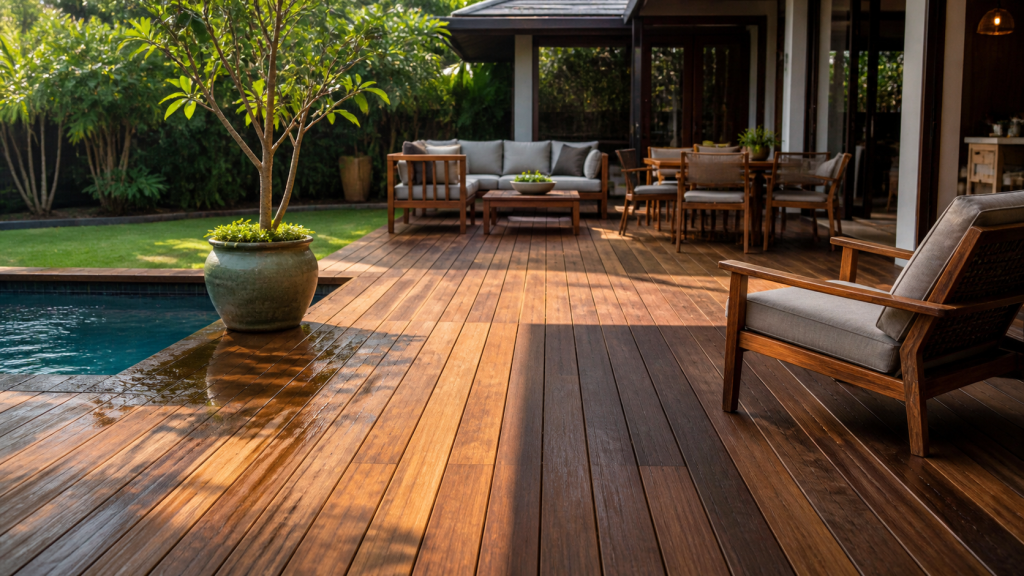
Performance Factors That Influence Batu vs Ipe Decking Choice
Climate and Exposure
Rainfall, humidity, freeze-thaw cycles, salt air, and intense sun all influence deck performance. In harsh climates or highly exposed sites, Ipe is often selected for maximum durability and predictable long-term performance.
Batu can still be a strong choice when boards are well-selected and the deck is detailed for drainage, airflow, and proper moisture management.
Foot Traffic and Usage
For high-traffic households, frequent entertaining, pets, or commercial-style use, Ipe’s superior hardness can reduce visible wear. Batu performs well in many residential settings, especially when furniture pads are used and grit is regularly swept off the surface.
Shade vs Full Sun
Full sun accelerates graying and can increase surface checking over time. Shade slows UV change but may increase dampness and organic growth if airflow is poor.
If your deck is heavily shaded and stays damp, prioritize ventilation, cleaning, and detailing regardless of whether you choose Batu or Ipe.
Ground Contact and Ventilation
Good ventilation beneath the deck reduces moisture retention and supports long-term stability. Avoid designs where boards stay wet for extended periods.
If the project is close to grade, ensure proper clearance, drainage, and airflow. Even highly durable hardwoods can underperform when trapped moisture is constant.
Maintenance for Batu vs Ipe Decking
Routine Cleaning
Both woods benefit from consistent sweeping and periodic washing to remove dirt, pollen, leaves, and organic buildup. A regular cleaning routine helps preserve appearance, reduce slippery film, and support even weathering.
Use cleaning methods appropriate for hardwood decking. Avoid harsh pressure washing or aggressive cleaning that can damage the surface or raise the grain.
Sealing, Oiling, and Finishing
If you want to keep the original brown tones, use a penetrating hardwood deck oil with UV inhibitors. Follow the finish manufacturer’s preparation and recoat guidance.
Film-forming coatings are usually more demanding outdoors because peeling can become a recurring issue. Many homeowners prefer penetrating finishes for hardwood decking because they are easier to maintain over time.
Color Retention vs Natural Weathering
With either Batu or Ipe, you have two realistic options:
- Maintain color: Clean and oil the deck on a recurring schedule.
- Allow natural weathering: Let the wood turn silver-gray and focus on cleaning.
Color retention requires more attention, especially on sunny and exposed decks. Natural weathering usually reduces finishing labor, but cleaning is still important to prevent staining, organic buildup, and uneven appearance.
Mold, Mildew, and Stain Management
Dark spots and discoloration are often caused by surface contaminants rather than the wood itself. Leaves, planters, doormats, pollen, and damp shade can all contribute to staining.
Prompt cleanup, airflow, and routine cleaning are the best defenses. Using compatible stainless steel fasteners can also reduce iron-related staining and streaking.
Refinishing and Resurfacing
If the deck becomes uneven in color, shows surface wear, or develops minor checking, it can often be refreshed through cleaning and light sanding where needed. A penetrating oil can then be applied if color retention is desired.
Because both woods are dense, sanding and prep can be labor-intensive. Planning maintenance before the surface becomes rough can reduce future effort.
Maintenance Frequency Comparison
Maintenance frequency depends more on appearance goals and exposure than on Batu vs Ipe alone. If you want a rich, consistent color, expect routine oiling. If you accept natural graying, maintenance can focus mainly on cleaning and spot treatment.
Cost Breakdown: Batu vs Ipe Decking
Material Cost
Batu is often priced lower than Ipe, making it attractive for larger decks or budget-sensitive projects that still require a premium hardwood look.
Ipe usually commands a higher price because of its hardness, reputation, performance, and demand. Pricing for both materials can vary based on thickness, width, grade, profile, availability, and supplier practices.
Installation Labor Cost
Labor can be a major part of the total project cost. Both woods usually require pre-drilling, careful fastening, accurate spacing, and proper handling.
Ipe may increase labor time because it is harder on tools and more difficult to drill. Batu can also require significant labor, especially if boards need more sorting, alignment, or corrective handling.
Fasteners and Accessories
High-quality fasteners matter for both materials. Stainless steel screws, hidden fastener systems, specialty drill bits, end sealer, spacers, and hardwood-compatible blades can add to the budget, but they also reduce the risk of staining, corrosion, splitting, and installation problems.
Maintenance Cost Over Time
Long-term maintenance cost depends on whether you oil the deck for color retention, how exposed the deck is, and how often it needs cleaning or refinishing.
Letting the deck gray naturally can reduce finishing costs, but cleaning is still necessary for traction, appearance, and stain control.
Total Cost of Ownership
When comparing batu vs ipe decking, do not only compare price per board. Consider:
- Expected service life
- Installation complexity
- Maintenance approach
- Fastener and accessory costs
- Board replacement difficulty
- Exposure and traffic level
For long-stay homes, harsh climates, or high-use spaces, Ipe’s durability can improve long-term value. For homeowners balancing performance with budget, Batu can be a strong value when installed and maintained correctly.
Risks and Trade-Offs in Batu vs Ipe Decking
Common Installation Pitfalls
- Skipping pre-drilling
- Using undersized pilot holes
- Installing with poor ventilation underneath
- Using inappropriate fasteners
- Failing to seal end grain
- Installing boards with inconsistent spacing
- Storing boards in wet or uneven conditions before installation
Movement, Checking, and Cracking
Checking, or small surface cracks, can occur in many exterior woods as they cycle through wet and dry conditions. Both Batu and Ipe can check over time, especially in strong sun.
Correct spacing, ventilation, end sealing, and careful moisture management can reduce the severity of checking.
Splintering and Surface Wear
Dense hardwoods generally wear well, but surface feel depends on exposure and care. Dirt and grit act like sandpaper under foot traffic. Regular sweeping helps reduce wear.
If a deck is neglected, checking and raised grain can become more noticeable, affecting barefoot comfort on either material.
Staining and Discoloration
Staining can come from metal fasteners, leaf tannins, planters, doormats, organic growth, and uneven sun exposure. Compatible fasteners, routine cleaning, and early stain treatment help prevent deeper discoloration.
Supply Variability
“Batu” can be used as a trade name that may include related species groupings. Appearance and performance can vary by supplier practices and grading.
Ipe is also subject to variation by grade, milling quality, and board selection. For both materials, consistent sourcing and clear grading reduce surprises.
Buying Guide: How to Choose Between Batu vs Ipe Decking
Questions to Ask Before Choosing
What Look Do You Prefer?
Choose Batu if you prefer a warmer red-brown appearance. Choose Ipe if you prefer deeper brown tones, possible olive undertones, and more dramatic natural variation.
How Much Maintenance Are You Willing to Do?
If you want a consistent “just installed” color, plan for recurring cleaning and oiling. If you prefer lower finishing maintenance, allow the deck to weather naturally and focus on cleaning.
What Is Your Budget?
If upfront budget is a major concern, Batu may be the better fit. If maximum lifespan and durability matter more than upfront cost, Ipe may justify the premium.
How Harsh Is the Site?
For intense sun, heavy rain, salt air, high traffic, or demanding commercial-style use, Ipe usually provides a larger performance margin. Batu can still perform well in many residential projects with correct installation and maintenance.
What to Look for When Selecting Boards
Grade and Quality
Ask about grade, expected color range, allowable defects, and supplier quality control. Higher grades usually mean better visual consistency and fewer installation problems.
Straightness and Milling
Inspect for straight boards with consistent thickness and clean milling. Uniform boards help the deck lay flatter and reduce installation time.
Defects to Avoid
Avoid boards with excessive end checking, deep cracks, severe warp, or defects near fastening zones. Minor checking can be normal in hardwoods, but heavily compromised boards should be rejected before installation.
What to Confirm Before Purchase
- Actual dimensions, not only nominal dimensions
- Board profile and edge design
- Compatibility with hidden fasteners if needed
- Moisture condition and storage method
- Return policy for defective boards
- Lead times and batch consistency
- Availability of extra material from the same batch
Installation Planning for Batu vs Ipe Decking
Face Fastening
Face fastening is straightforward and secure, but fastener heads remain visible. Pre-drilling is usually essential for both Batu and Ipe. Quality screws designed for dense hardwoods help reduce snapping and improve holding strength.
Hidden Fastening
Hidden fasteners create a clean, premium surface. Compatibility depends on board profile and fastening system. Hidden fastening can increase material cost and may require more careful planning around spacing and edge details.
Pre-Drilling and Tools
Plan for sharp blades, durable bits, countersinks, and extra tooling. This is especially important with Ipe. Proper pilot holes reduce splitting and create a cleaner finish.
Spacing and Ventilation
Correct spacing supports drainage, airflow, and seasonal movement. Follow supplier guidance based on local climate and board moisture condition.
Ensure airflow beneath the deck, especially in shaded or damp areas. Poor ventilation is one of the most common causes of long-term deck problems.
End Sealing and Edge Detailing
End grain is vulnerable to checking. Using an end sealer and planning clean edge details can reduce moisture-related stress.
Thoughtful detailing around borders, stairs, picture framing, and transitions also improves long-term appearance and stability.
Decision-Making: Which Is Better, Batu or Ipe Decking?
Choose Batu Decking If:
- You want a premium hardwood look with a lower upfront cost than Ipe.
- You prefer warm red-brown tones.
- Your project is residential with moderate to heavy use.
- You have good ventilation and drainage in the deck design.
- You can source consistent, well-graded boards from a reliable supplier.
- You are comfortable following best practices for storage, spacing, fastening, and maintenance.
Choose Ipe Decking If:
- You want maximum hardness and dent resistance.
- Your deck will receive heavy foot traffic, pets, or frequent entertaining.
- Your site has intense sun, harsh exposure, or demanding moisture conditions.
- You want one of the strongest natural hardwood options for long-term outdoor use.
- You are willing to pay more upfront for stronger durability and long-term value.
Priority-Based Decision Matrix
| Priority | Better Choice | Why |
|---|---|---|
| Budget-first | Batu | Usually lower upfront material cost while still offering a hardwood look. |
| Durability-first | Ipe | Harder, denser, and widely chosen for demanding applications. |
| Appearance-first | Depends on preference | Batu is warmer and red-brown; Ipe is deeper brown with more variation. |
| Low-maintenance-first | Ipe, if budget allows | Both need cleaning, but Ipe offers a larger durability margin in harsh exposure. |
| DIY installation | Batu | Still difficult, but often slightly easier to cut and drill than Ipe. |
Final Verdict: Batu vs Ipe Decking
Both Batu and Ipe are strong choices for premium outdoor hardwood decking, but they serve different priorities.
Batu decking is a smart choice if you want a warm hardwood appearance, strong outdoor performance, and better upfront budget control. It works especially well for residential decks where proper installation, ventilation, and maintenance are part of the plan.
Ipe decking is the better choice if maximum hardness, long-term durability, and performance under heavy traffic or harsh exposure are your top priorities. It costs more and is harder to install, but it can deliver excellent long-term value in demanding projects.
For most homeowners comparing batu vs ipe decking, the right answer depends on whether budget, appearance, installation difficulty, or long-term durability matters most.
FAQ: Batu vs Ipe Decking
Is Batu decking better than Ipe decking?
Batu is not universally better than Ipe. Batu is often better for budget-conscious projects that still need a premium hardwood look, while Ipe is usually better for maximum hardness, durability, and long-term performance.
Which lasts longer, Batu or Ipe decking?
Ipe generally has the stronger reputation for long-term durability, especially in harsh exposure or high-traffic settings. Batu can also last a long time when installed correctly, kept ventilated, and maintained properly.
Does Batu or Ipe decking require more maintenance?
Maintenance depends more on your appearance goals than on the species alone. If you want to preserve the original color, both Batu and Ipe require recurring cleaning and oiling. If you allow natural graying, maintenance mainly focuses on cleaning.
Which is more expensive, Batu or Ipe decking?
Ipe is usually more expensive than Batu in upfront material cost. However, total cost should also include installation labor, fasteners, accessories, maintenance, and expected service life.
Which is harder to install, Batu or Ipe decking?
Ipe is usually harder to install because it is denser and tougher on blades and drill bits. Batu is also a dense hardwood and still requires pre-drilling, but it is often somewhat easier to work with than Ipe.
Will Batu and Ipe decking change color over time?
Yes. Both Batu and Ipe will naturally weather to a silver-gray patina when exposed to UV and outdoor conditions. To retain the original color, use a penetrating hardwood deck oil with UV protection.
Is Batu or Ipe decking suitable for wet areas?
Both can be suitable for wet areas when installed with proper drainage, ventilation, and surface maintenance. Slip resistance depends on cleaning, surface texture, moisture, and organic buildup, not only the wood species.
Is Ipe worth the extra cost over Batu?
Ipe can be worth the extra cost if your project requires maximum durability, high traffic resistance, and long-term performance in harsh conditions. Batu may be the better value if you want a premium hardwood appearance at a lower upfront cost.



No comment