
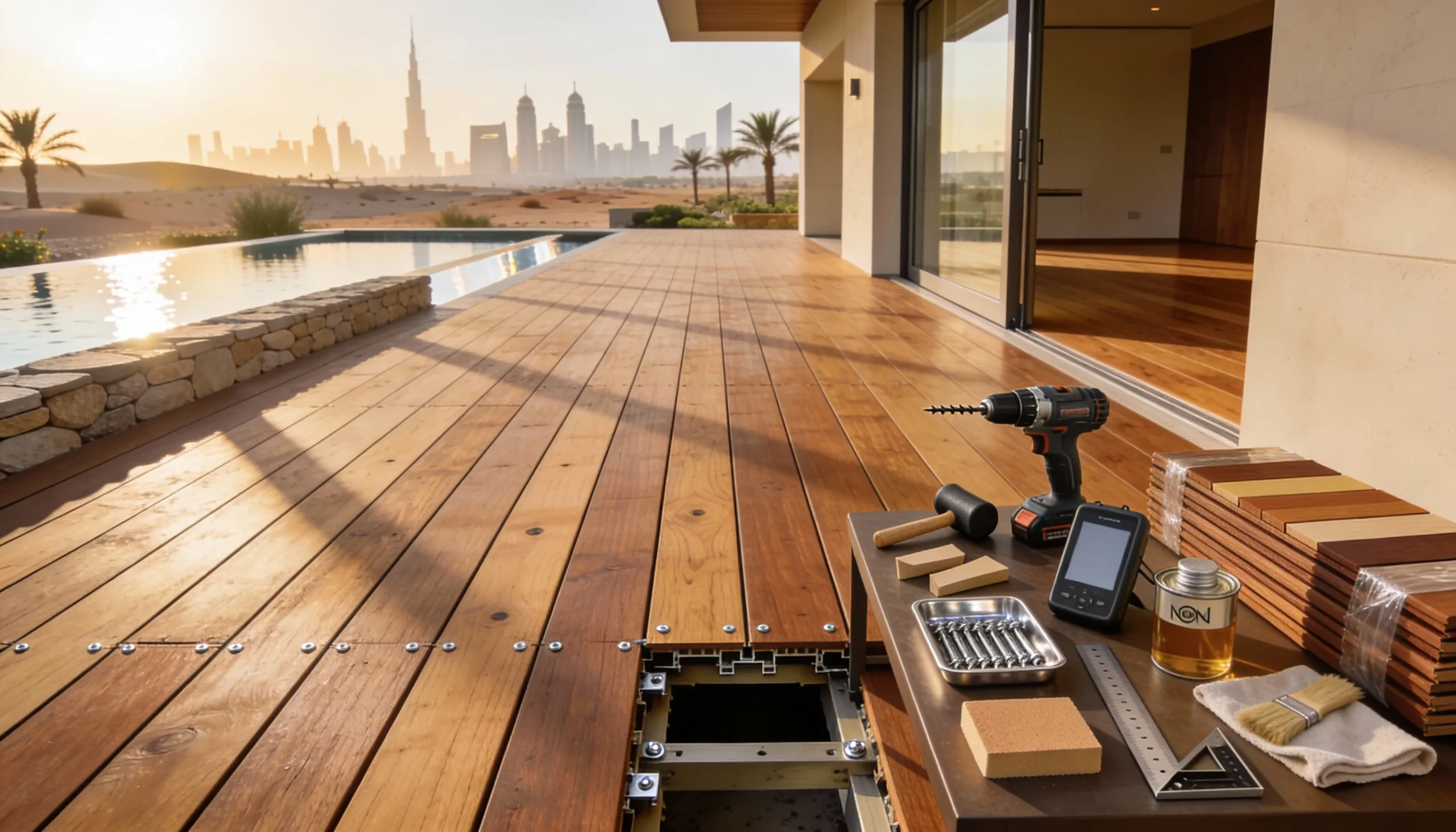
Hardwood in Dubai: How to Choose, Install and Maintain Timber for UAE Homes & Projects
- Hardwood in Dubai works well when you choose species and construction (e.g., thermowood, engineered wood) suited to heat and humidity.
- Use durable, stable species (teak, iroko, thermally modified timber) for outdoor decking and engineered options for interior flooring.
- Proper installation, acclimatisation and maintenance (sealing, controlled humidity) extend lifespan in UAE conditions.
- Thermowood AE offers bespoke supply and installation services for hardwood in Dubai — request a quote for design and site assessment.
Why choose hardwood in Dubai?
Hardwood in Dubai remains a preferred material for interiors and exteriors because of its natural beauty, longevity and the premium feel it adds to residential and commercial projects. In the UAE market, customers choose timber flooring, decking and cladding to elevate design while prioritising long-term performance. Whether you’re specifying hardwood for a villa, hotel or rooftop terrace, understanding species, engineered options and local climatic factors is essential.
For technical background on hardwood species and properties, see Hardwood – Wikipedia
What affects hardwood performance in Dubai?
Dubai’s climate—hot summers, occasional high humidity and strong UV—affects timber more than temperate climates. Key risk factors:
- High temperatures and solar exposure causing drying, cracking and colour changes.
- Humidity swings that cause movement (expansion and contraction) in solid wood.
- Chlorinated or saltwater exposure on balconies and near pools.
- Pest risk (wood-boring insects) — mitigated by treatment and species selection.
Choose the right construction: solid vs engineered vs thermally modified
Solid hardwood is beautiful but more prone to movement in Dubai’s humidity. Engineered wood (a thin hardwood veneer over a stable plywood or HDF core) is more dimensionally stable and ideal for indoor timber flooring. Thermally modified wood (thermowood) undergoes heat treatment to improve stability and decay resistance, making it a top choice for outdoor decking and cladding in the UAE.
If you want a deep dive into engineered wood technologies, see Engineered wood – Wikipedia
Best hardwood species and products for Dubai
Not all species perform equally. Below is a comparison of common options for Dubai projects.
| Species / Product | Durability & Stability | Maintenance | Heat & Moisture Resistance | Typical Cost | Recommended Use |
|---|---|---|---|---|---|
| Teak | Very high | Low to medium (oils for colour) | Excellent (natural oils) | High | Decking, outdoor furniture, cladding |
| Iroko | High | Medium | Very good | Medium to high | Outdoor decking, joinery |
| Thermowood (Thermally modified softwoods) | High | Low | Very good (improved stability) | Medium | Decking, cladding, façades |
| Engineered Oak | Medium to high | Medium (refinish veneer) | Good (stable core) | Medium | Interior flooring, commercial spaces |
| Merbau | High | Medium | Good (dense) | Medium | Decking, high-traffic flooring |
Design and specification tips
To make hardwood in Dubai perform well, follow these practical guidelines:
- Select engineered wood for indoor areas with air conditioning to reduce movement.
- For outdoor decks, choose teak, iroko, merbau or thermally modified timber and use stainless steel fixings for coastal locations.
- Specify UV-resistant finishes and consider powder-coated or ventilated facades for wooden cladding to avoid trapped moisture.
- Allow acclimatisation: deliver timber to site and store at ambient temperature for 48–72 hours before installation.
- Work with suppliers who provide kiln-drying certificates and treatments for insect/fungal resistance.
For installation standards and more detailed workmanship guidance, check recognised industry resources like the national installation guidelines and best practices commonly referenced by contractors. For more on hardwood performance characteristics, see Teak – Wikipedia
Costs and budget considerations in Dubai
Pricing varies by species, board format (solid vs engineered vs plank width), finish and installation complexity. Rough guidelines for Dubai projects:
- Economy engineered flooring (good quality veneer): lower to mid-range cost.
- High-end engineered or wide-plank oak: mid to high cost.
- Outdoor tropical hardwoods (teak, merbau): premium cost due to import and sustainability sourcing.
- Thermally modified wood: competitive price compared to high-end tropical hardwoods but offers improved stability and sustainability credentials.
Always get contractor quotations that itemise supply, delivery, acclimatisation, underlay, adhesives, fixings and finishing. For bespoke joinery, factor in labour skill and import lead times.
Installation & maintenance best practices
Installation tips
- Acclimatise timber on-site and maintain consistent indoor humidity (ideal 45–55% for most hardwood floors).
- Use moisture barriers and suitable adhesive systems rated for the UAE climate.
- Allow movement gaps around perimeter; follow manufacturer’s expansion guidelines.
- For decking, ensure proper drainage, ventilation beneath boards and stainless-steel fixings in marine environments.
Maintenance tips
- Regular cleaning with recommended products; avoid excessive water on floors.
- Periodic resealing or oiling for decks and high-traffic areas (schedule depends on exposure and finish).
- Promptly repair localized damage; refinish engineered surfaces only per veneer thickness recommendations.
- Annual inspections for exterior timber to check for weathering, loose fixings or trapped moisture.
For detailed maintenance instructions tailored to your product, consult the manufacturer or installer; many suppliers in Dubai provide maintenance schedules during handover. See local recommended practices and guidelines for long-term care and health considerations such as low-VOC finishes referenced by public health resources like the NHS for indoor air quality (general guidance) NHS
Where to buy hardwood in Dubai and what to ask suppliers
When sourcing hardwood in Dubai, choose experienced suppliers who can provide:
- Material certificates (origin, grading, kiln-dry report).
- Sample boards and mock-ups for colour and finish confirmation.
- Installation and aftercare service options.
- Warranty and service-level agreements for commercial projects.
Ask for references of similar UAE projects and request on-site assessments. If sustainability matters, verify chain-of-custody certification (FSC or PEFC) and check whether thermally modified options are available to reduce reliance on slow-growth tropical species.
For project planning, you can review Thermowood AE’s portfolio and request technical advice via hardwood installation services or see product ranges at [INTERNAL_LINK: product catalog]. If your project includes outdoor living spaces, consider outdoor decking solutions.
Comparing hardwood in Dubai: summary of pros and cons
Choosing hardwood in Dubai is a balance of aesthetic preference, budget and technical suitability:
- Pros: Natural beauty, durability (when specified correctly), high resale value, versatile for interiors and exteriors.
- Cons: Requires correct species and construction to handle climate; maintenance commitment for outdoor use; higher upfront cost for premium species.
Case studies & real-world examples
Dubai projects often favour thermally modified timber for façades and tropical hardwoods for high-end terraces. Engineered oak remains popular for luxury apartments and hospitality interiors due to stability and finish options. For commercial or bespoke projects, ask suppliers for case studies demonstrating performance in coastal and high-UV environments.
Explore further design ideas and installation photos in our resources or request a site visit through [INTERNAL_LINK: company about us] to discuss feasibility and costing.
Frequently Asked Questions
1. Is hardwood suitable for Dubai homes?
Yes—when you select appropriate species or engineered constructions and follow acclimatisation and finishing best practices, hardwood performs well in Dubai homes.
2. What is the best hardwood for outdoor decking in the UAE?
Teak, iroko and merbau are excellent choices; thermally modified softwoods (thermowood) are also highly recommended for durability and stability.
3. Should I choose solid or engineered wood for my Dubai apartment?
Engineered wood is typically better for indoor flooring in Dubai because it offers greater dimensional stability in variable humidity and temperature.
4. How often does a hardwood deck need maintenance in Dubai?
Maintenance frequency depends on exposure; generally, annual inspections and oiling or sealing every 6–24 months maintain appearance and protection.
5. Are thermally modified timbers (thermowood) eco-friendly?
Thermowood improves stability without chemical treatments and can use fast-growing species, offering a more sustainable alternative to some tropical hardwoods.
6. How do I prevent hardwood flooring from warping in Dubai?
Control indoor humidity, acclimatise boards before installation, use engineered formats and follow manufacturer installation guidelines to minimise warping.
7. Can hardwood be used near pools or on terraces?
Yes, with durable species, correct fixings, ventilation and finishes. Stainless steel fasteners and proper drainage are essential for poolside installations.
8. Where can I get a quote for hardwood supply and installation in Dubai?
Contact Thermowood AE for a site survey and tailored quotation — they provide supply, installation and maintenance guidance for hardwood in Dubai projects.
Choosing a supplier: why Thermowood AE
Thermowood AE specialises in hardwood solutions tailored for the UAE climate—offering thermally modified options, engineered flooring and end-to-end installation. Their technical teams support material selection, acclimatisation protocols and maintenance plans to ensure long-term performance.
If you want to discuss specifics—species selection, sample procurement, or a full-site quotation—reach out for a professional consultation. You can request a personalised quote or schedule a site visit here: Thermowood AE Contact.
Final recommendations
Hardwood in Dubai is an excellent investment when material choice and installation respect local climatic realities. Prioritise engineered or thermally modified products for stability, choose durable species for exterior use and partner with experienced suppliers who can offer warranties and maintenance plans. Accurate specification and professional installation are key to enjoying timber’s warmth and aesthetic for decades.
Ready to get started? For a site assessment, sample boards and a competitive quote, contact Thermowood AE today at https://thermowood.ae/contact-2 — or request a consultation through our team to discuss hardwood in Dubai for your project.



No comment